Views: 0 Author: Ronix Tools Publish Time: 2026-07-01 Origin: Site


The debate between corded vs cordless power tools has been going on for years—and in 2026, it’s more relevant than ever. With advances in lithium-ion batteries and brushless motors, cordless tools are stronger than ever. At the same time, corded tools still dominate in heavy-duty, continuous-use applications.
Whether you’re a DIY user, contractor, or workshop owner, understanding the real differences helps you choose the right tool for performance, cost, and long-term efficiency.
This guide combines insights from industry reviews and expert comparisons to give you a clear, practical breakdown—and shows why brands like Ronix Tools are becoming a strong choice in both categories.
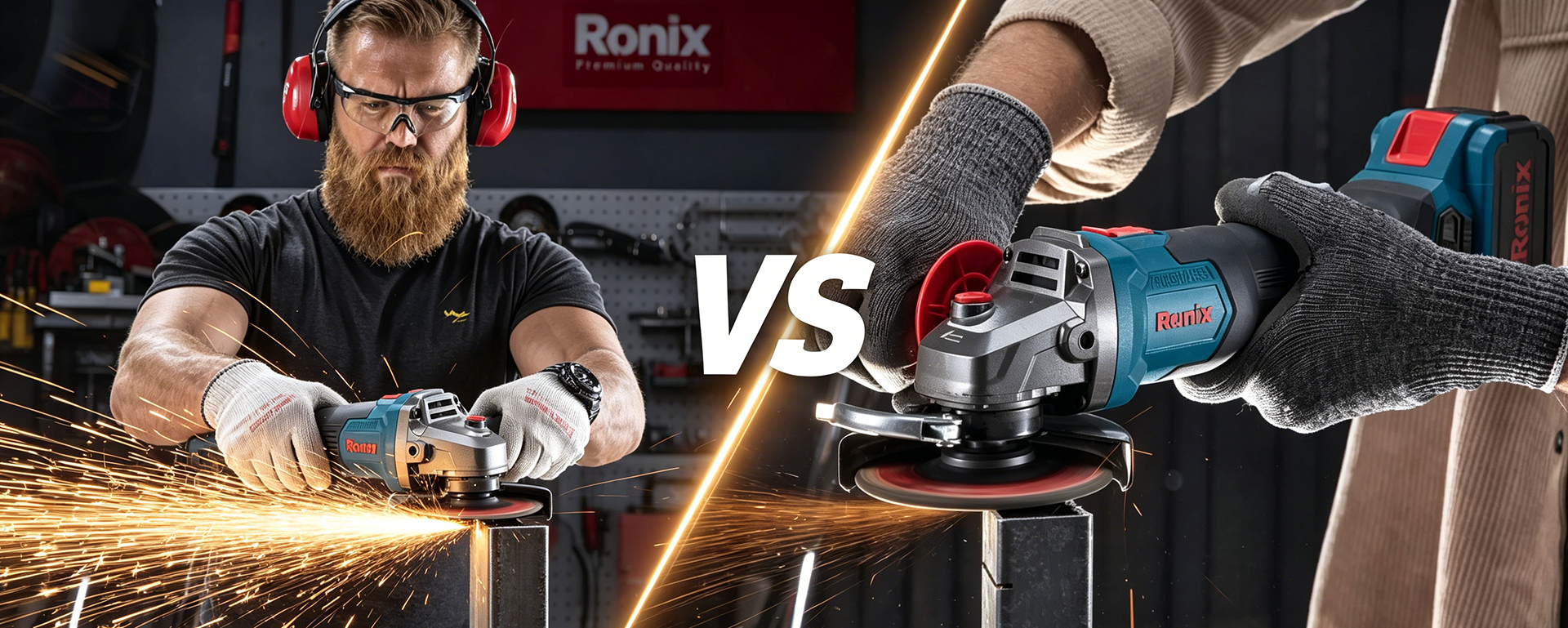
Corded power tools are powered directly through an electrical outlet. They do not rely on batteries, which means they can run continuously as long as power is available.
Common examples include:
· Bench tools (table saws, sanders)
· Unlimited runtime—no battery interruptions
· Consistent high power output for demanding tasks
· Lower cost compared to battery-powered kits
· Better for continuous work like cutting, grinding, or sanding
Industry comparisons consistently highlight that corded tools excel in long-duration and high-load applications due to stable power delivery .
· Limited mobility due to power cords
· Cable management and safety risks
· Less convenient for outdoor or remote jobs
Cordless power tools run on rechargeable lithium-ion batteries, offering full mobility without being connected to a power source.
Common cordless tools include:
· Jobsite lighting and handheld tools
· Maximum portability—use anywhere
· No cable restrictions, improving maneuverability
· Faster setup time on job sites
· Safer workspace with fewer tripping hazards
Modern battery systems have significantly narrowed the performance gap, with many cordless tools now matching corded power in short-burst applications .
· Battery runtime limits continuous use
· Higher upfront cost (batteries + charger)
· Battery degradation over time
Feature | Corded Tools | |
Power Output | Very consistent | Strong but battery-limited |
Mobility | Low | Very high |
Runtime | Unlimited | Limited by battery |
Cost | Lower initial cost | Higher initial investment |
Best Use | Workshops, heavy-duty tasks | Job sites, outdoor work |
As multiple industry reviews point out, the choice is not about which is “better,” but which is better for the job type .
Corded tools are ideal when:
· You work in a fixed workshop
· You need long, uninterrupted runtime
· You’re handling heavy materials (metal, concrete, thick wood)
· You use stationary or semi-stationary machines
Examples:
· Table saws
· Bench grinders
· Continuous sanding or polishing tasks
Cordless tools are the better choice when:
· You move frequently between job sites
· You work outdoors or in remote areas
· You need fast setup and mobility
· You do short, repetitive tasks (drilling, fastening)
Examples:
· Assembly work
· Roofing or field construction
· Home repairs and DIY projects
Today’s professionals rarely choose just one system. Instead, they build a hybrid toolkit:
· Cordless tools for mobility and speed
· Corded tools for power-heavy, continuous operations
This balanced approach improves efficiency and reduces downtime.
In the evolving power tool market, Ronix Tools has positioned itself as a practical solution for both DIY users and professionals.
1. Dual ecosystem strategy
Ronix offers both corded and cordless solutions, allowing users to build a unified tool system based on their needs.
2. Professional-grade performance
Their tools are designed for construction, workshop, and industrial applications with a focus on durability and consistent output.
3. Cost-performance balance
Compared to many premium brands, Ronix provides competitive performance at more accessible pricing.
4. Wide application coverage
From drilling and fastening to cutting and grinding, Ronix covers both light-duty and heavy-duty use cases.
There is no universal winner in the corded vs cordless debate.
· Choose corded tools if you prioritize power, endurance, and workshop-based work
· Choose cordless tools if you prioritize mobility, convenience, and flexibility
· Choose both if you want a complete, professional-grade setup
The real advantage today is not choosing one over the other—but choosing the right combination for your workflow.
And with brands like Ronix expanding both ecosystems, building a balanced, efficient toolkit has never been easier.