Views: 0 Author: Ronix Tools Publish Time: 2026-11-06 Origin: Site


Choosing the right power tool manufacturer is not as simple as picking the most popular name on the market. A professional contractor may care most about durability and working efficiency, while a distributor needs competitive pricing, consistent quality, and a reliable supply chain. For private-label brands and importers, customization options and manufacturing capabilities are equally important.
So, who makes the best power tools?
Several manufacturers have built strong reputations in the global power tool industry. Names such as DeWalt, Milwaukee, Makita, Bosch, and Ronix are recognized in different markets for their product ranges, engineering approaches, and business models.

However, the best choice depends on what you expect from a power tool and how you plan to sell or use it.
In this guide, we will compare some of the leading power tool brands, explore what separates a good manufacturer from an average one, and explain what B2B buyers should consider before placing an order.
Before comparing manufacturers, it is worth looking at the factors that actually determine product quality.
A recognizable brand name does not automatically mean every product in its catalog is the right choice. For professional users and commercial buyers, several practical details deserve closer attention.
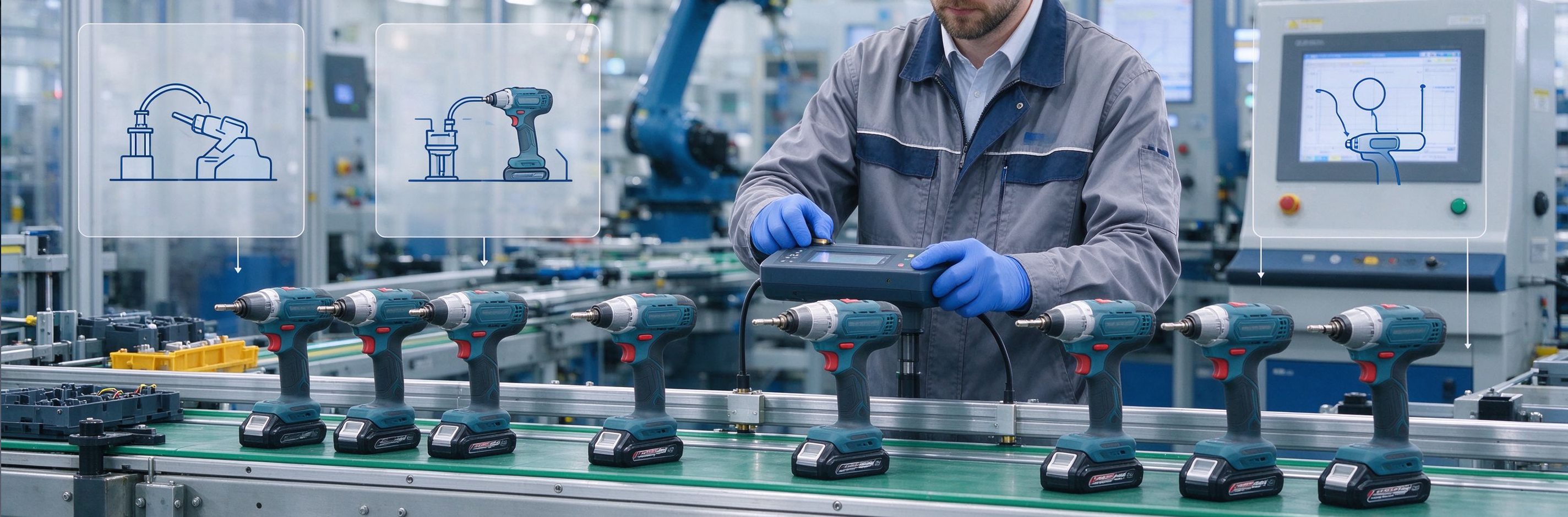
A power tool must perform consistently under real working conditions. Motor efficiency, torque output, battery performance, heat management, and mechanical construction all influence its overall performance.
For example, a cordless drill used occasionally for household repairs has different requirements from one operating throughout a working day on a construction site.
Reliable tools should maintain stable performance without frequent breakdowns or excessive maintenance.
Durability is particularly important for professional contractors and industrial users.
A well-designed power tool should withstand repeated use, vibration, dust exposure, and the occasional impact. Housing materials, internal components, bearings, switches, and gear systems all contribute to product lifespan.
Manufacturers that invest in material selection and production consistency are generally better positioned to deliver dependable products.
Cordless power tools have become increasingly important in the global market.
Battery capacity, charging time, power output, thermal protection, and compatibility between tools are all important purchasing considerations.
A practical battery platform can also create additional sales opportunities for distributors. Customers who already own compatible batteries may be more likely to purchase additional tools from the same product family.
A strong power tool manufacturer should offer more than one or two popular products.
Drills, impact wrenches, angle grinders, circular saws, rotary hammers, and other equipment serve different applications. A broad product portfolio allows distributors to develop a complete product offering rather than working with multiple suppliers.
Innovation matters, too. Brushless motors, improved battery systems, ergonomic designs, and enhanced safety features are becoming important competitive advantages.
For B2B buyers, manufacturing capability is just as important as product performance.
A reliable supplier should have standardized production processes, incoming material inspections, in-process quality checks, and final product testing.
Consistent quality across different production batches is essential for businesses that depend on repeat orders.
There is no universal winner in the power tool industry. Different manufacturers serve different customer groups and market segments.
Here are five brands worth considering when evaluating the global power tool market.
The following table provides a general comparison of the five brands from a purchasing perspective.
| Brand | Recognized Strength | Suitable Customer Groups |
| DeWalt | Professional construction tools | Contractors and tool retailers |
| Milwaukee | Cordless professional tools | Trade professionals and distributors |
| Makita | Broad power tool portfolio | Professional and general tool markets |
| Bosch | Engineering and product diversity | Industrial and construction buyers |
| Ronix | Broad product selection and international B2B opportunities | Importers, wholesalers, and distributors |
It is important to understand that this is a market positioning comparison, not an independent laboratory performance ranking.
The best manufacturer for your business depends on your target customers, sales channels, product requirements, and purchasing budget.
For wholesalers, importers, and private-label businesses, choosing a manufacturer involves more than comparing product specifications.
The following factors can have a direct impact on long-term profitability.
Product price is one of the first things distributors consider.
However, the lowest quotation does not always provide the best business opportunity.
Buyers should evaluate the total purchasing cost, including product price, shipping, packaging, import duties, warranty arrangements, and potential after-sales expenses.
A manufacturer offering consistent quality at a competitive price can help distributors maintain healthier margins.
OEM and ODM services are particularly valuable for businesses developing their own power tool brands.
Depending on the manufacturer's capabilities, customization may include:
· Logo customization: Adding a company logo to the tool body or packaging.
· Color customization: Selecting colors that match an existing brand identity.
· Housing design: Adjusting product appearance and selected structural details.
· Battery options: Choosing compatible battery configurations and capacities.
· Charger customization: Selecting suitable charging specifications.
· Packaging design: Creating customized cartons, labels, and user manuals.
Not every manufacturer offers the same level of customization. Buyers should confirm available options, minimum order quantities, tooling requirements, and sample approval procedures before production.
Different markets have different regulatory requirements.
For example, products entering the European market may need to comply with applicable CE requirements and relevant legislation. RoHS requirements may also apply to electrical and electronic equipment.
For the US market, applicable electrical safety standards and testing requirements should be reviewed according to the product category.
B2B buyers should request relevant technical documentation and verify that the supplied documents apply to the actual product model.
A supplier may offer attractive products but still create problems if it cannot deliver orders on time.
Before establishing a long-term partnership, buyers should understand the manufacturer's production capacity, lead times, material sourcing arrangements, and peak-season production planning.
For distributors with established sales channels, reliable replenishment is essential.
Power tools contain mechanical and electrical components that may require maintenance or replacement.
A dependable supplier should have a clear process for handling product defects, warranty claims, spare parts, and technical questions.
This is particularly important for distributors who want to build long-term customer relationships rather than focus only on one-time transactions.
The global power tool market offers opportunities for distributors willing to explore different sourcing strategies.
Working with an international manufacturer can provide access to a wider product selection, different price segments, and potential private-label development opportunities.
For emerging tool brands, sourcing from an experienced manufacturer may also reduce the investment required to develop products independently.
However, successful sourcing requires careful supplier evaluation.
Rather than making decisions based solely on a catalog or quotation, buyers should request samples, compare technical specifications, review quality documentation, and discuss long-term cooperation requirements.
If you are an importer, wholesaler, or brand owner, the following process can make supplier selection more efficient.
Step 1: Define Your Target Market
Identify your main customer groups. Are you selling to professional contractors, hardware stores, industrial buyers, or DIY consumers?
Your target market determines the product specifications and price range you should focus on.
Step 2: Select the Right Product Categories
Start with products that have clear demand in your market.
Cordless drills, impact drivers, angle grinders, rotary hammers, and circular saws are common categories worth evaluating.
Step 3: Compare Manufacturers
Evaluate product quality, pricing, customization services, production capacity, and certifications.
Avoid making decisions based on price alone.
Step 4: Request Samples
Product samples allow you to check actual performance, ergonomics, materials, and packaging before committing to a larger order.
Step 5: Discuss Commercial Terms
Confirm MOQ, payment terms, production lead time, shipping arrangements, warranty policies, and spare parts availability.
Step 6: Build a Long-Term Partnership
A reliable supplier should support your business beyond the initial order. Regular communication, consistent product quality, and responsive service are essential for sustainable growth.
For international buyers, finding a supplier that understands both product requirements and distribution needs can make a real difference.
Ronix offers a diverse range of power tools and related equipment for different applications and market segments.
Its portfolio gives distributors the opportunity to explore multiple product categories while developing a consistent product offering.
Whether you are expanding an existing hardware business, entering the power tool market, or looking for products to support your private-label strategy, evaluating Ronix as a potential business partner can be a practical starting point.
Before making a purchasing decision, discuss your target market, product specifications, order volume, and customization requirements with the supplier.
A good business relationship should be built around product suitability, dependable quality, and mutual long-term growth.

There is no single manufacturer that is best for every application. DeWalt, Milwaukee, Makita, Bosch, and Ronix are among the brands worth considering. The right choice depends on product performance, budget, target users, and market requirements.
DeWalt, Milwaukee, Makita, and Bosch are well-known options in professional applications. Buyers should compare individual product models rather than relying only on brand reputation.
The best brand for distributors is one that offers suitable product categories, competitive pricing, consistent quality, dependable supply, and effective after-sales support. The ideal choice also depends on local market demand.
Check product specifications, sample quality, MOQ, production capacity, certifications, packaging, warranty terms, and delivery schedules. It is also advisable to confirm the supplier's quality control procedures.
Yes. Many manufacturers offer OEM services, including logo printing, packaging customization, and selected product appearance options. Customization availability, MOQ, and costs vary by supplier and product.
Buying directly from a manufacturer can provide better communication regarding specifications, customization, and production arrangements. However, buyers should still evaluate the supplier's experience, quality management, documentation, and service capabilities.
So, who makes the best power tools?
The answer depends on what you value most. Some manufacturers are particularly well positioned in the professional cordless market, while others offer broader product portfolios or different commercial opportunities.
For B2B buyers, the real goal is not simply to find the most famous brand. It is to identify a manufacturer that can deliver the right combination of product quality, competitive pricing, manufacturing capability, and reliable long-term cooperation.
If you are looking for power tools for distribution, wholesale, or private-label business, explore the Ronix product range and evaluate the solutions that match your market.
Visit Ronix to discover more power tools and explore potential B2B cooperation opportunities.