Views: 0 Author: Ronix Tools Publish Time: 2026-11-25 Origin: Site


When shopping for cordless power tools, you may notice that many products carry the word "Brushless" in their names. Brushless drills, brushless impact wrenches, and brushless angle grinders have become increasingly popular among professional contractors, construction workers, and tool distributors.
But what does brushless actually mean? Is a brushless power tool more powerful than a traditional one? Does it really last longer? And is the higher purchase price worth paying?
The answer starts with understanding how an electric motor works.
In this guide, we will explain brushless motor technology, compare brushed and brushless power tools, and explore why this technology matters when selecting products for professional applications or wholesale distribution.
In power tools, brushless means that the electric motor operates without carbon brushes.
Traditional brushed motors use small carbon components, known as brushes, to transfer electrical current to a rotating commutator. As the motor operates, these parts remain in physical contact, creating friction and gradually wearing down.
A brushless motor works differently. Instead of relying on physical brushes, it uses an electronic controller to regulate the electrical current supplied to the motor windings.
This electronic switching system controls the magnetic interaction between the rotor and stator, keeping the motor rotating.
In simple terms, a brushless motor replaces mechanical contact with electronic control.
Brushless technology is particularly valuable in cordless power tools, where battery efficiency and working time directly affect productivity.
To understand the difference, it helps to look at the main components of a brushless motor.
A typical brushless DC motor consists of three important elements:
Rotor: The rotating component that contains permanent magnets.
Stator: The stationary component containing copper windings that generate magnetic fields when electrical current passes through them.
Electronic Controller: The control system that regulates current flow through the stator windings, allowing the rotor to continue spinning.
When a user pulls the trigger, the electronic controller supplies current to the appropriate motor windings. The resulting magnetic fields interact with the permanent magnets in the rotor, producing rotational movement.
The controller continuously adjusts the electrical switching sequence to maintain rotation and respond to operating conditions.
Unlike a brushed motor, there is no physical contact between carbon brushes and a commutator.
This is one reason brushless motors can operate with less friction and reduced wear.
Both motor types convert electrical energy into mechanical power. However, their internal structures and operating characteristics are quite different.
Here is a practical comparison:
| Comparison | Brushed Motor | Brushless Motor |
| Motor structure | Uses carbon brushes | No carbon brushes |
| Current control | Mechanical commutation | Electronic commutation |
| Friction | Higher mechanical contact | Reduced mechanical friction |
| Energy efficiency | Generally lower | Generally higher |
| Maintenance | Brushes may require replacement | No brush replacement required |
| Heat generation | More friction-related heat | Generally less friction-related heat |
| Motor lifespan | Affected by brush wear | Potentially longer service life |
| Purchase cost | Usually more affordable | Usually more expensive |
| Speed control | Depends on motor design | Advanced electronic control is possible |
For buyers, the biggest difference is not simply the motor structure. It is how that structure affects daily operation, maintenance costs, and long-term product value.
A brushed power tool can still be a sensible option for occasional household applications or customers working with limited budgets.
However, for frequent professional use, brushless technology offers several advantages worth considering.

Why are more professional power tool manufacturers introducing brushless models into their product ranges?
The reasons are closely connected to working efficiency and operating costs.
Battery life is one of the first things users consider when purchasing cordless power tools.
A traditional brushed motor loses some energy through friction between its brushes and commutator. A brushless motor eliminates this particular source of mechanical loss.
Its electronic controller can also regulate power delivery according to operating requirements.
As a result, a brushless cordless tool can often complete more work on a single battery charge than a comparable brushed model.
For contractors working on construction sites without convenient access to power outlets, this can make a noticeable difference.
Carbon brushes gradually wear down during operation. Depending on the motor design and working conditions, they may eventually need to be replaced.
Brushless motors eliminate this maintenance requirement.
With fewer mechanical wear components inside the motor, they can offer a longer potential service life.
Of course, this does not mean the entire power tool is maintenance-free. Bearings, switches, gears, batteries, and other components still require proper care.
Heat is a common challenge in power tools, especially when they operate under heavy loads for extended periods.
In brushed motors, physical contact between the brushes and commutator creates friction and additional heat.
Brushless designs remove this contact point, reducing friction-related energy loss.
Better thermal performance can contribute to improved reliability, although actual operating temperatures also depend on the motor design, electronic protection, ventilation, and workload.
An electronic controller gives brushless motors greater flexibility in managing motor operation.
Depending on the tool's control system, it can regulate speed, torque, and power delivery according to the application.
For example, driving a small screw into softwood requires less power than drilling into a thick metal plate.
A well-designed brushless tool can adjust its operation to suit different workloads.
This helps users achieve more controlled results across a wider range of applications.
For professional users, maintenance means more than replacing a component.
It also means lost working time.
Since brushless motors do not have carbon brushes that need periodic replacement, users can reduce one common maintenance task.
For contractors, rental companies, and equipment distributors, this can be an attractive advantage when evaluating long-term operating costs.
Brushless technology has clear benefits, but it is not automatically the best choice for every buyer.
There are several factors worth considering.
Higher initial cost
Brushless power tools generally cost more than comparable brushed models because of their electronic controllers and more sophisticated motor designs.
For users who only need a drill occasionally, the additional investment may not provide enough practical value.
More complex electronic components
A brushless motor depends on an electronic control system. If the controller develops a fault, diagnosis and repair may require specialized knowledge.
Not completely maintenance-free
Although carbon brush replacement is unnecessary, other parts of the tool still experience wear. Batteries also have a limited service life.
Performance depends on overall tool design
A brushless motor alone does not guarantee excellent performance. Battery capacity, motor quality, gearbox construction, cooling, and electronic protection all matter.
For this reason, buyers should evaluate the complete tool rather than choosing a product based only on the brushless label.
Brushless technology is now widely used across several cordless power tool categories.
For distributors and wholesalers, understanding these applications can help identify products that meet the needs of different customer groups.
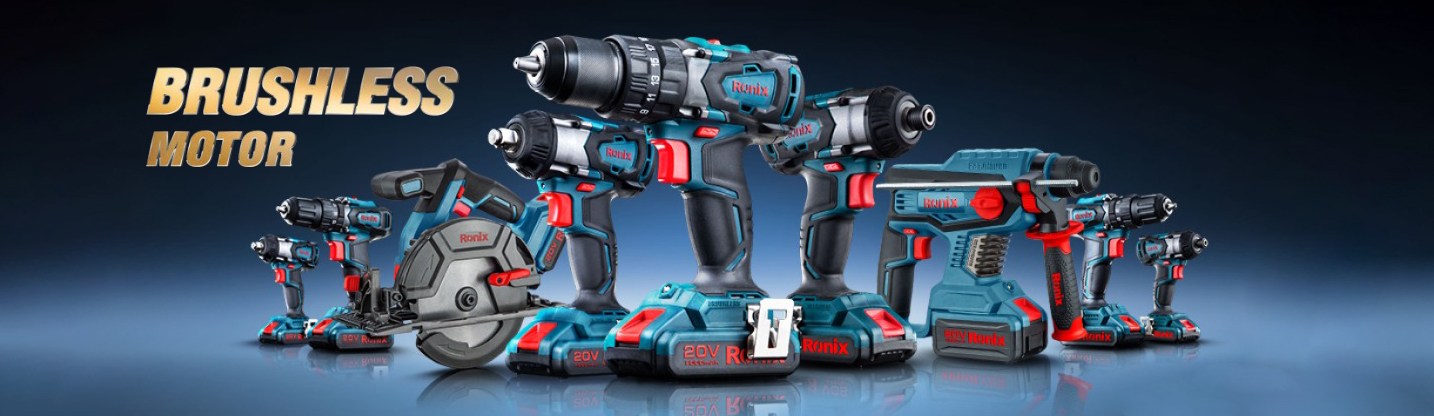
Cordless drills are among the most common applications of brushless motor technology.
They are used for drilling holes and driving screws in wood, metal, and other materials.
A brushless cordless drill is particularly suitable for professional installers, carpenters, electricians, and construction workers who need reliable performance throughout the working day.
Impact wrenches are designed for tightening and loosening nuts and bolts.
They are widely used in automotive repair, mechanical maintenance, equipment installation, and construction.
Brushless motors can provide efficient power delivery and reduce brush-related maintenance, making them suitable for demanding fastening applications.
Angle grinders are used for cutting, grinding, and surface preparation.
Because these tools often operate at high speeds, motor efficiency and thermal management are important considerations.
A brushless cordless angle grinder can offer greater flexibility for metalworkers, installers, and maintenance professionals.
Rotary hammers are commonly used for drilling into concrete, brick, and masonry.
A brushless motor can help improve the efficiency of cordless models, particularly when the tool is used frequently on construction sites.
Cordless circular saws and reciprocating saws also benefit from brushless motor technology.
These tools are used in woodworking, renovation, demolition, and general construction.
For users who regularly work with different materials, efficient power delivery can help improve productivity.
If you are planning to purchase brushless power tools, there are several important specifications to check.
1. Motor Performance
Look beyond the brushless label. Check the tool's torque, rotational speed, impact rate, and rated power where applicable.
2. Battery Voltage and Capacity
For cordless tools, battery voltage and amp-hour capacity affect the available power system and operating time.
Common battery platforms include 12V, 20V, and 40V.
Remember that battery capacity and motor efficiency work together. A higher-capacity battery does not automatically mean a more powerful motor.
3. Application Requirements
Different users need different tools.
A furniture installer may prioritize a compact brushless drill, while an automotive technician may need an impact wrench with sufficient fastening torque.
4. Product Durability
Check the gearbox, housing, cooling system, battery protection, and overall construction.
These components have a direct influence on how well the tool performs under regular working conditions.
5. Supplier Reliability
For importers and wholesalers, product quality is only one part of the purchasing decision.
A reliable supplier should also provide technical documentation, product specifications, spare parts support, and consistent supply capabilities.
For distributors, importers, and professional tool buyers looking to expand their cordless product selection, Ronix offers several brushless power tools designed for different applications.
Here are some models worth exploring.
The Ronix 8900K is a versatile cordless drilling solution for professional users and demanding DIY applications.
Its brushless motor is designed to improve energy efficiency and reduce mechanical wear.
This model is suitable for woodworking, metal drilling, installation, and general construction applications.
The Ronix 8657 is a cordless angle grinder designed for cutting, grinding, and surface preparation.
For automotive workshops, equipment maintenance, and fastening applications, the Ronix 8675 offers another brushless cordless option.
For buyers interested in a higher-voltage cordless platform, the Ronix 8905 is a 40V brushless lithium drill.
For more models and product specifications, explore the complete Ronix Cordless Tools Collection.
The answer depends on how frequently the tool will be used and what the buyer expects from it.
For occasional household repairs, a traditional brushed tool may be sufficient. Its lower purchase price can make it a practical choice.
For professionals who use power tools every day, brushless models are often worth considering.
Although the initial investment may be higher, improved energy efficiency, reduced brush maintenance, and better electronic control can provide meaningful benefits over time.
For wholesalers and distributors, offering both brushed and brushless models can also be a sensible market strategy.
Not every customer has the same budget or application requirements. A balanced product portfolio makes it easier to serve different market segments.
Not necessarily. Brushless technology can improve motor efficiency and power control, but actual performance depends on the motor design, battery system, gearbox, and overall tool specifications.
Brushless motors do not require carbon brush replacement. However, other components, including bearings, gears, batteries, and electronic systems, still need proper maintenance.
They can have a longer motor service life because they eliminate wear between carbon brushes and the commutator. However, the lifespan of the complete tool depends on its construction, usage, and maintenance.
In many cases, yes. Their efficiency, reduced brush maintenance, and electronic control make them attractive for frequent professional applications.
However, the right choice still depends on the specific job and budget.
No. Both brushed and brushless motors are used in cordless power tools. Buyers should always check the product specifications before purchasing.
Not exactly. Brushless DC (BLDC) is a type of electric motor that uses electronic commutation instead of mechanical brushes and a commutator. The term describes the motor's operating design rather than simply its power source.
So, what does brushless mean in power tools?
It refers to a motor design that eliminates carbon brushes and uses electronic control to generate rotation. This change may seem small, but it can make a considerable difference in energy efficiency, motor maintenance, heat generation, and overall working performance.
For professional users, brushless power tools offer a practical solution for frequent applications where efficiency and reliability matter.
For importers, wholesalers, and distributors, understanding this technology also makes it easier to select products that match changing customer expectations.
At Ronix, the cordless tool range includes brushless drills, impact wrenches, angle grinders, and other professional solutions designed for different working requirements.
Looking for a reliable brushless power tool supplier? Explore Ronix products at Ronixhub.com and contact our team to discuss wholesale purchasing, product specifications, and distribution opportunities.